Every year on the last weekend of April Wakamiya Shrine holds its annual festival in Shima, the neighborhood of Agematsu that lies directly across the Kiso River. Shima is a place that I’ve called home for nearly seven years now so this festival is definitely one that’s close to my heart. On the Friday of the weekend the geizarai (or traditional performing arts) is held at the Shima Community Center. Typical festival fare is served as well — yakisoba, grilled hot dogs, and even oden (slowly stewed vegetables typical of winter).
毎年、4月の最終週末上松町の島区に若宮神社の例祭が行われます。島区というのは駅から降りて木曽川の向こう側にある区です。この島は約7年間に「ホーム」と呼ばれますし、本当に自分にとって大好きなところです。金曜日の夜に必ず芸習い(げいざらい)が行われて、芸習いというのは日本の伝統的な芸術。島の防災コミュニティーセンターで行って、芸習いとともに祭りの定番の屋台的な感じも出します。焼きそばやフランク、おでんにもあります。


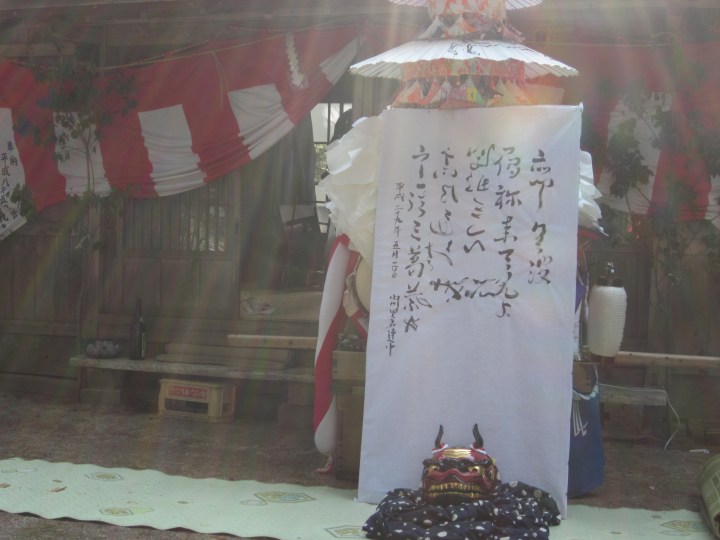
The highlight of the stage arts is the scene titled Kuzu no ha (Kudzu leaf). As is typical of many traditional performing arts in Japan, shishimai (“lion dance” a person in a traditional lion costume performs) appears in most scenes. In Kuzu no ha the lion portrays a fox, which in Japanese folklore is said to be able to change forms and trick humans. The fox has taken the form of a human and had a relationship with a male human, bearing a child. The fox, learning that her secret will soon be discovered, must depart back for her home in the woods. The scene is quite melancholy and portrays the fox saying farewell to its child. What makes the scene so beautiful is that it ends with the fox writing a letter to its child saying that “This is farewell, but if you love me and wish to see me I can be found in the woods by the spring under the Kudzu leaves.” Since the character is a fox, it cannot write like a human can, so the person in the lion outfit writes the characters holding the brush in the mouth. What’s fascinating too is that the fox role writes the characters traditionally on one row, upside down in another, and reverse in another. I think most people could struggle doing that writing with their hands.
芸習いのハイライトは「葛の葉」という演劇の場面。この辺の芸習いはほとんど獅子舞があります。「葛の葉」という話は獅子役が人間に化けたきつねで、人間と子供ができたのですが、本当の姿は化けると知ったきつねが子供との別れのシーンです。長くて、ドラマチックな演技で、最後のところは一番お楽しみです。子供に手紙を書きますが、きつねなので手で書けないし、普通のじも書けないというわけで、獅子役が口に筆を挟んで障子に書きます。一や二列目までは普通の字で、それから裏返した字も書き、そして裏文字も書きます。メッセージは文字通りを覚えていないですが、「恋しければ、森の中に、泉の後ろにある葛の葉の下にいます。寂しいお別れですが、お母さんが待っています」…みたいな感じかな?でも本当にステキで感動的なシーンです。普通の人は裏返した文字や裏文字を手で書けないでしょう。口で書くって素晴らしいです。

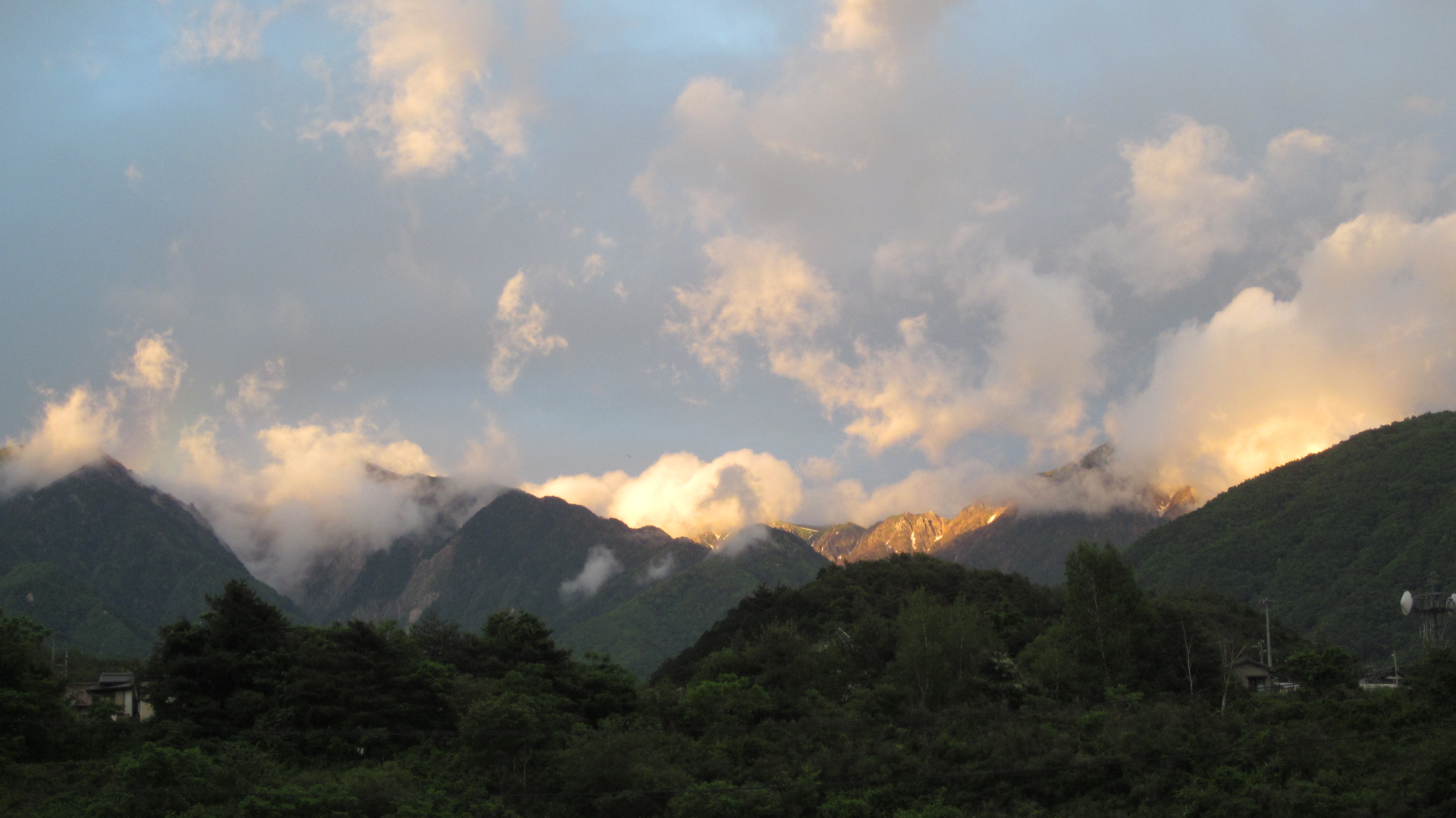
On the Sunday of the festival, I had planned on taking it easy. But suddenly my former students came to my door frantically ringing the bell. “Steve!! Steve!! Help!!” I go to see what the commotion is about. It turns out two foreigners stumbled upon the festival and they needed help going to a tourist spot in town and were going the wrong way. So I met them and gave them directions. But it didn’t end there. People in Agematsu are super hospitable and invited the two foreigners and myself to join the festivities later on. At around 2 PM they would bring the omikoshi (or small shrine that is carried around during festivals and temporarily houses the spirit of the shrine) back up the mountain and again display the performing arts for the people at the shrine grounds. In my seventh year living here it would be my first time to go up the mountain to the shrine. The road up was stunning with the peach trees in full blossom with Mt. Koma standing brilliantly in the background.
祭りの日曜日はお家でゴロゴロするつもりでしたが、急に子供の教え子が必死にピンポンをして「スティーブ!!早く来て!」。なんだろうな、あの騒ぎ。そして見に行ったらたまたま外国人2人が獅子舞がお家に回っているところに来て、観光地のところへ行こうとしたみたいが道がわからなくて困ったところでした。みんな一生懸命英語を使おうとしたのですが、やっぱり道を教えるってちょっと難しかった。僕は道を教えましたが、さすが上松の町民、せっかく来たので一緒にお神輿と山登らないかと聞かれて、山にある若宮神社のところへ行ってお祭りの祝いを見るかと誘われました。僕も、ここでは7年目、山の神社へ行ったこともなくて、とてもいいチャンスでした。外国人2人が観光地へ行って、後ほどまた島で3人プラス島の子供達の待ち合わせで、山へ登りました。山への道は本当に絶景だった。桃の花はもう満開で、後ろに駒ヶ岳の立派な山脈が見えました。金曜日の芸習いとほぼ同じ演技、また「葛の葉」が演技される予定でした。

At the top, it was great to see so many familiar faces. Former students, people from the community. The weather was a perfect 10. Sitting down, enjoying the festivities, hearing stories, all while sharing this with the two foreigners who happened upon the town. It was really special. “We’ve been traveling around Japan for almost a month, and we leave later this week. Today has by far been the best day.” That was really cool to hear. My former students were super interested in them and tried their best to communicate, using English or not. We got to see Kuzu no ha again and enjoy some of the other scenes at the picturesque Wakamiya Shrine.
若宮神社で懐かしい顔、教え子や地域の方々、たくさん見れて、嬉しかった。天気はこの日に本当に完璧でした。座って、また芸習いを見て、いろんな話を聞き、新しい遠くから来てる仲間2人と一緒に過ごして、とてもステキな時間でした。その2人は「日本中に役一ヶ月に旅してるんです。いろんなところへ行って、とても良かったが、やっぱり今日は一番良かった。」そう言ってくれて、日本の良さと上松町の人々の優しさやおもてなしさがわかってくれて、本当に嬉しかった。いい日本の旅になったといい。子供の教え子も、その2人にとても興味があって、うまく英語での話ができなくても、一生懸命コミュニケーションを取ろうとする姿はとてもステキで、彼らにとってとても大事な経験と思います。そして最後にまた「葛の葉」を見れて、町の人々に話の意味を教えてくれて、7年目のに初めて話の意味を知って良かった。
 In the evening, I was invited out to bring the shrine around town. This is my favorite part of festivals here in Japan. There’s so much community to it. The members of the shrine carry the omikoshi around the neighborhood, I assume to share the blessings of the spirit carried within it and to celebrate the festival. The omikoshi weighs over 150 kilograms so members of the community bring out refreshments of alcohol, fruits, and pickled vegetables for the people carrying the small shrine and for the people joining in the procession. Along the way, the rhythm of the drums, the melody of the flutes, and the traditional festival song plays seamlessly throughout the carrying of the small shrine. Two of my former students joined the shrine association and for both of them it was their first time being involved with the festival. It was really special to see them involved and being part of such a rich and beautiful tradition. At the end of the procession, the omikoshi is carried back up the mountain and a special ceremony is held. The final shishimai, the lion dance, held in the glow of the lanterns, with the festival drums and flutes accompanying it, creates a mysterious atmosphere. After the ceremony, the people return down the mountain as the person in the lion outfit returns the spirit back to the shrine.
夜ではお神輿と島区内に一緒に来ないかと誘われて、行きました。僕にとってお神輿を地域のところに運ぶことがお祭りの一番好きなこと。地域のみんな、老若男女は来て、ともに歩いたり、多くのおうちではお酒や野菜などの補給を参加している人のために用意してくれたりして、その地域とお祝いすることが好き。とても素敵だなと思います。その夜で、神社の参加している人はお神輿を担いだり、お祭りの太鼓や笛を演奏したりして、僕は多くの地域のみんなさんと一緒にお神輿とそばに歩きました。教え子2人が今年初めて参加することができて、その活躍や伝統を引き継ぐ姿を見れて本当に良かった。お祭りの最後にお神輿はまた山の上にある若宮神社に運ばれました。提灯の光でお祭りの神楽の演奏のともに、とても神秘的な雰囲気で最後の獅子舞がありました。踊りが終わって、一般の人が山から降りて、その間に獅子役がお神輿から神様を戻しました。
I can’t explain how special the weekend was for me. Living in Agematsu now for over six years, being a part of this special community. It’s home, and always will be for me. Being able to spend this weekend with the community here was so special.
この土日は言葉にできないほど大切な思い出になりました。上松での生活はもう6年経ってますので、この地域の方々と一緒に過ごし、僕にとっての宝物です。上松ってやっぱりホームです、僕の「日本の実家」。この島の方々と過ごせて、友達と過ごせて、とてもステキな週末でした。
スティーブ



 hinoki town